
 61%off
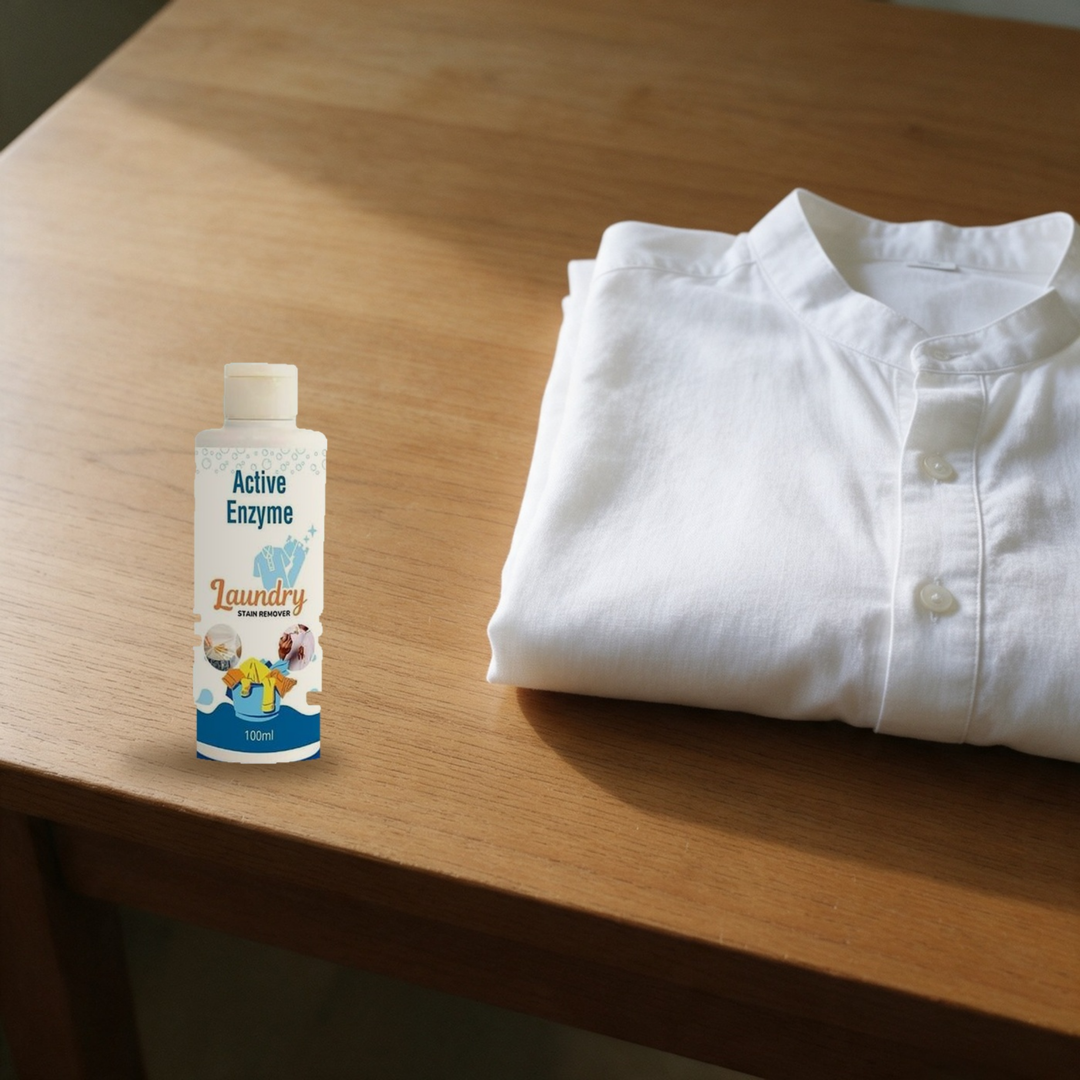
All in one fabric stain remover Pack of 2 · 100 ml each
The wash did not take it out. Scrubbing will not either.
An enzyme liquid for cloth. Wet the mark, cover it, wait a few minutes, then wash the garment the way you normally do. The enzymes loosen the stain down where it sits between the fibres, so the wash can carry it out instead of you rubbing the cloth thin trying to force it. Two bottles of 100 ml, and both hold the same liquid.
4.4 · 3,400+ delivered
- Pay when it arrives
- Free shipping across India
- 7-day replacement
Dispatched within one working day. Metros 3–5 days, smaller towns 5–7. Tracking by SMS.
Before you order
What you actually get.
Two bottles of 100 ml. No powder to mix, no bucket to soak in, nothing to pour into the machine.
 In the box
Two bottles, one liquid
Both bottles hold the same stain remover.
Pack of 2 means two of the same 100 ml bottle. Same white bottle, same blue and orange label, same liquid inside. If you were expecting two different products — one bottle for this kind of stain, another for that — this is not that, and we would rather you read it here than open the box at the door. Most households keep one bottle where the washing happens and leave the second sealed in the almirah. A hundred millilitres is a spot-treatment size: a little on the mark, not a capful into a load.
 How it works
Enzymes, not elbow
Scrubbing is the mistake. The liquid does that part.
A stain is not sitting on top of the cloth. It has gone down between the fibres, which is why rubbing only pushes it deeper and wears a pale thin patch into the weave that never comes back. This works the other way round. In contact with water the enzymes start breaking the stain down where it sits, so the ordinary wash can carry it out. Your job is to wet the mark, cover it, and leave it alone. Blot with a white cloth if you want to watch it move. Do not take a brush to it.
 On clothes
Haldi, chai, oil, collar
The marks that come home with the family.
Haldi on a white kurta after one careless serving. Chai down a shirt front, coffee on a dupatta. Kadhai oil and ghee, which wash out to a dull grey shadow and stay there. The grey-yellow line along a collar and under the arms that a normal cycle never reaches. Kids' food and a leaked pen on a school uniform that has to be white again by Monday. And the one everybody knows — the stain that already went through the machine once and came out with the shirt.
 Honest limits
What it is not
It lifts stains. It does not repair cloth.
Test a hidden seam first — an inside hem, the tucked-in tail of a shirt — because some cheap dyed cottons bleed with any stain remover, and we would rather you find that out on a seam than on the front of a kurta. It will not bring back fabric that has already been bleached, burnt by an iron, or worn thin. Very old dye-based marks such as paan, mehendi and hair colour usually only lighten. It is made for fabric, not for tiles, walls or upholstery foam, where there is no wash step to carry anything away. And 100 ml is a spot treatment — nothing here goes into a bucket or into the machine drum.
Where people use it
The stains it gets bought for.
Ordinary washing-day problems. Nothing heroic.
-
01
Haldi and masala on white
The yellow patch on a white kurta after one careless serving, the orange ring on a cotton dupatta. The mark the machine turns pale and then leaves alone.
-
02
Chai and coffee
The brown splash down a shirt front on the way to work, the ring dried onto a table runner. Milk tea dries darker than it looked when it was wet.
-
03
Cooking oil and ghee
Kadhai splash on a sleeve, ghee down the front of a kurta. A normal wash takes the shine off and leaves a dull grey shadow where the oil sat.
-
04
Sweat and collar grime
The grey-yellow line that builds along a collar and under the arms over months of wear. Give it ten minutes, not three.
-
05
Kids' food and ink on uniforms
Sauce, chocolate, a pen that leaked in the shirt pocket. School white has to be white again by Monday morning.
-
06
The stain that survived the machine
The one you already washed once. Treat it before it goes back in, and before it ever sees an iron.
- Enzymes do the work.The liquid breaks the stain down in the fibre so the wash can carry it out. No brush, no scrubbing the cloth thin.
- Treats the spot, not the load.A little on the mark instead of a capful poured into the whole machine.
- White and coloured cotton.Test a hidden seam first. Cheap unfixed dyes can bleed with any stain remover, and that is the fabric, not the liquid.
- Two bottles, same liquid.100 ml each. One to keep where you wash, one sealed for later.
How to use
Wet it, cover it, wait.
The waiting is the part people skip, and it is the part that decides whether the mark comes out in one go.
-
01
Test a hidden seam first
Inside hem, inside seam, the tail of the shirt that stays tucked in. A little liquid, wait two minutes, press with a white cloth. If colour comes off on the cloth, do not use it on that garment. It takes two minutes and it saves the kurta.
-
02
Wet the mark, then cover it
A damp cloth or a splash of water on the stain first — the enzymes need water to start. Then cover the mark and a little past its edge. Do not work it in with a brush and do not rub it between your palms.
-
03
Wait, then wash as usual
Give it five minutes. Old or greasy marks want ten to fifteen. Do not let it dry on the cloth. Then wash the garment the way you normally do. Look at the spot while it is still wet — if a shadow is left, treat it once more before it goes anywhere near heat.
Keep away from children
What the treatment looks like
From the mark to the wash.
-
Minute 0
Blot, do not rub
Lift off whatever is still sitting on top with a dry cloth. Rubbing pushes the stain further into the weave and spreads its edge.
-
Minute 1
Wet it and cover it
A splash of water on the mark, then the liquid over it and a little past the edge. Then leave it alone.
-
Minute 5
The colour shifts
Haldi goes from yellow to pale, chai goes lighter brown, an oil mark stops looking wet. That is your sign the wash will finish it.
-
Same day
Wash and check before drying
Look at the spot while it is still wet. If a shadow is left, treat it once more. Never iron or dry a stain you can still see — heat sets whatever is left.
Times are for a fresh stain on cotton. Old marks and heavy fabric take longer, and sometimes a second round.
From the WhatsApp inbox
What people wrote back.
-
“Bete ki school shirt par sauce ka daag tha, do baar dho chuki thi. Paanch minute lagakar chhoda, phir normal wash. Nikal gaya, aur ragadna nahi pada.”
Sunita R. · Bareilly Paid on delivery
-
“Used it on a chai splash on my husband's white shirt and on an old ghee mark on a kurta. Both cleared. The second bottle is still sealed. Good that the page says both bottles are the same, I was not sure before ordering.”
Faisal M. · Bhopal Paid on delivery
-
“Kaam karta hai lekin bottle chhoti hai, 100 ml hi hai. Purane mehendi ke daag par sirf halka hua, poora nahi gaya. Site par pehle hi likha tha isliye shikayat nahi hai.”
Dinesh P. · Muzaffarpur Paid on delivery
Messages from customers who paid on delivery. Names shortened, nothing else changed.
Four things we will never do.
↔ Pick a card up and move it
-
Take your money first
You pay the delivery agent after the box is in your hands and you have seen both bottles.
-
Say it removes every stain
Paan, mehendi and old hair colour usually only lighten. Cloth that has been bleached, burnt or worn thin cannot be brought back at all.
-
Hide the delivery charge
₹699 is ₹699. Shipping is free and nothing is added at the door.
-
Show a photo you won't receive
Two bottles of 100 ml with the same liquid in each. That is the pack in the pictures and the pack that arrives.
Fair questions
The things people ask before ordering.
Are the two bottles different?
No. Both bottles hold the same fabric stain remover, 100 ml each. Pack of 2 means two of the same thing — one to keep out and one spare. If you were expecting one bottle for one kind of stain and a second bottle for another, this is not that product, and we would rather say so here than have you send it back.
Do I have to pay online?
No. Cash on delivery is the default. Place the order, the agent brings the pack, you look at both bottles, then you hand over ₹699. Prepaid is there only for people who prefer it.
Will it take the colour out of my clothes?
It is not a bleach, and on most coloured cotton it leaves the colour alone. But cheaply dyed fabric can bleed with any stain remover, so test a hidden seam first — an inside hem, the tucked-in tail of a shirt — and press with a white cloth. If colour transfers, do not use it on that garment.
Does it work on old stains?
Often, but give it longer and expect two rounds. Ten to fifteen minutes of contact instead of five, then wash, then look at the spot while it is still wet. Very old dye-based marks — paan, mehendi, hair colour — usually lighten rather than clear. Anything that has already been through an iron or a dryer has been set by the heat, and that is much harder to move.
Can I use it on the sofa or on tiles?
It is made for fabric. A cotton sofa cover you can take off and wash, yes. Upholstery foam, mattresses, walls, tiles and wood, no — there is no wash step there, so the liquid and the loosened stain both stay in the surface. It is also a spot treatment at 100 ml, so nothing here goes into a bucket or into the machine drum.
Is it safe at home?
It is a cleaning liquid, not soap. Keep both bottles away from children, use it where air is moving, wear gloves if your skin is sensitive, and rinse your hands after. Do not mix it with bleach or any other cleaner. If it gets in the eyes, rinse with plenty of water. If a bottle arrives leaking or empty, send a photo on WhatsApp at +91 87968 91049 within 48 hours and we replace it.